Physical Address
304 North Cardinal St.
Dorchester Center, MA 02124
Physical Address
304 North Cardinal St.
Dorchester Center, MA 02124

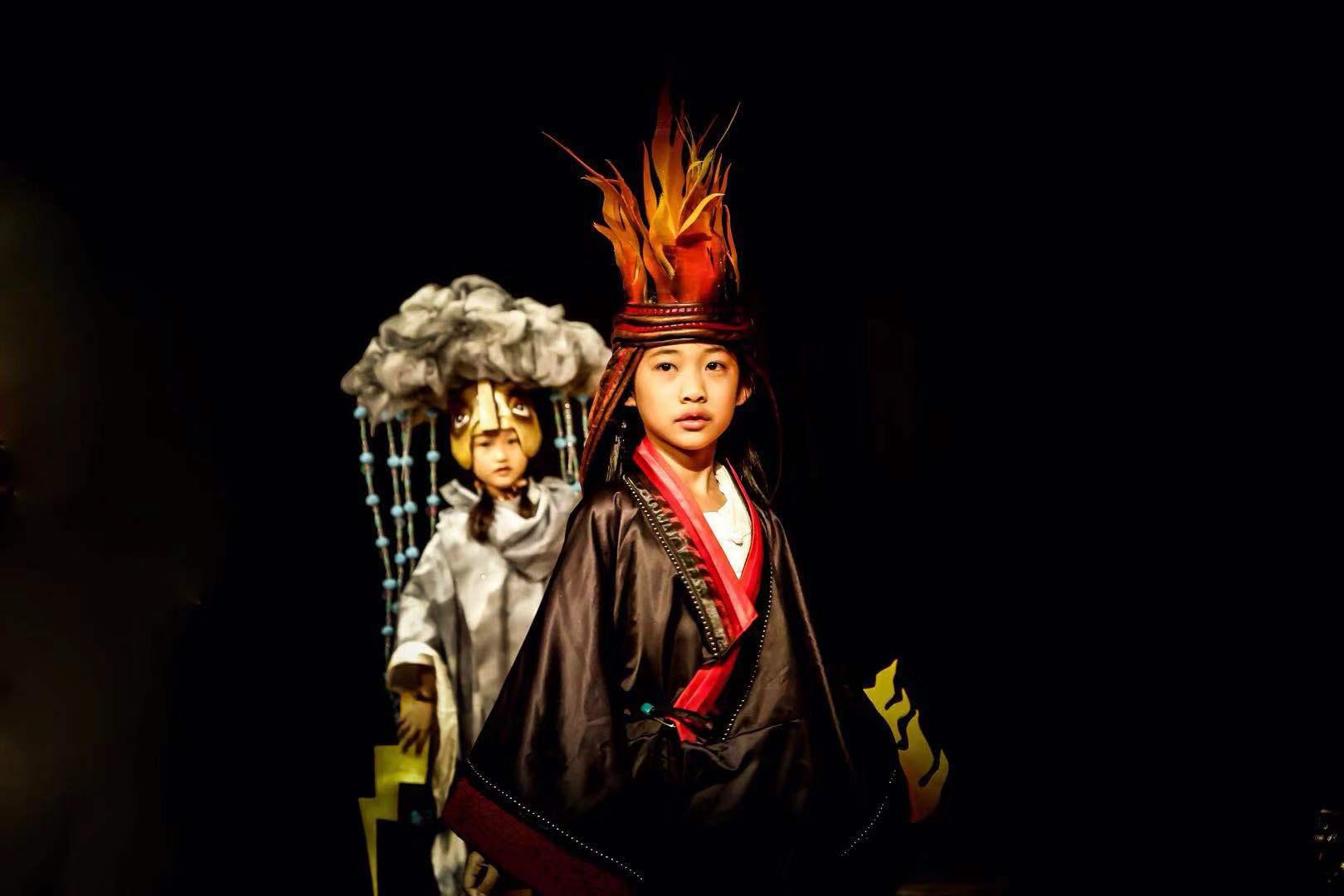
Zhong Kui, Ghost Hunter, a performance by children July 23–26 at the Collège de la Salle (Théâtre Gymnase), at 1:00 PM Presented by the Qfun theater company Running time: 45 minutes | For all audiences Libretto: Li Haotian, Wang Nan Direction: Ma Zhuojun Opera direction: Tang He Organization: Chen Ran Promotion: An Ni Set design and digital design: Wang Di Animated illustration and graphics: Wang Jiabao Music: Li Haotian Guqin performance: Cariotti Caterina Sophie Production: Aita Cultural and Artistic Company Reservations through the Festival OFF online box office ↓↓↓ https://www.avignonleoff.com/programme/2019/zhong-kui-chasseur-de-fantomes-s26931/ Adaptation of a legend “Zhong Kui” is a satirical play adapted from a Chinese tale recounting the story of General Zhong Kui, the ghost hunter. In the play, a little boy is mocked by his classmates. He asks the gods for help when he gets home after school. The door god, Zhong Kui, then appears to him in a dream—very ugly, singing and boasting of his abilities. The boy, trusting Zhong Kui, agrees with him to go to school to take revenge. But Zhong Kui’s mask accidentally falls off: it turns out that he is in fact a demon whom the true door god failed to capture. This demon is unable to carry out the boy’s revenge. The boy must ultimately rely on his own courage to defeat the classmates who had mocked him. “Zhong Kui” is a free adaptation of a play in the Yuan Zaju genre: “Five Ghosts Play with Zhong Kui in the Qingfeng Year.” In this play, Zhong Kui is not only responsible for hunting ghosts but can also become a powerful god, with the emphasis placed on his inner beauty (Zhong Kui being extremely ugly in appearance). This figure, along with those of the ghosts, makes it possible to explore the idea of judgment and the notion of beauty at the heart of a spirit world that is not unlike that of humans. Show overview On stage, lighting and digital effects create a magical world of ghosts. The music, over the course of the play, is performed live and blends the traditional Chinese guqin with bamboo flute and electronic drums, thereby bringing ancient China and modern China into dialogue. The actors are no more than 12 years old but have already undergone long-term training. Illustrator Garbo from the UCA arts academy (United Kingdom) and visual artist Wang Di created a ghostly, realistic visual effect, showing the interactions between the world of Zhong Kui and the real world through multimedia means, thus combining the fantastical dream world with that of reality. The setup also incorporates illustrative images and installations: the image of a ghost projected onto a person signifies that the person is gradually becoming a monster because of their inner ugliness. Since the show presents the plot in three acts, the writers incorporated several interactive segments. This allows the audience to take part in the events unfolding on stage, both as spectators and as participants. The director also makes use of certain comic elements of interaction. The Qfun troupe and the Aita company The Qfun troupe was founded in 2013 and is affiliated with Aita, a company holding a copyright platform for children’s playscripts, created by the actor and executive director of the theater studio Lin Zhaohua. The troupe has developed a theater-teaching course in order to introduce a theater-education program into primary schools and social-welfare institutions in Beijing. The creators of this show, Li Haotian and Ma Zhuojun, worked extensively with Lin Zhaohua, often called “the big chief.” He is the artistic director of the drama studio that bears his name, and is also a director of the Beijing People’s Art Theatre (former vice-president) and director of the Drama Art Institute of Peking University. He is a director recognized in both spoken theater and modern opera, and his productions from the 1980s (such as Station or Absolute Signal) helped bring about the emergence of Chinese experimental theater. More recently, his original creation “The Classic of Mountains and Seas” was an invited show at the Edinburgh Theatre Festival and the Wuzhen Drama Festival, and became one of the projects funded by the Ministry of Culture’s “Focus on China.”
